Critical Thinking Fundamentals - Introduction: Seminar

The lecture can be accessed here. The information from it is required in order to understand the examples in this seminar.
Applying Critical Thinking in Hasbara
In the introductory lecture, we explored the definition of an argument, a premise, and a conclusion, as well as the criteria governing the soundness and validity of argumentation.
It is crucial to apply this knowledge to Hasbara. For those unacquainted, Hasbara is a type of activism performed by Zionists, such as myself. The term originates from Hebrew, and its literal translation is "The Explanation."
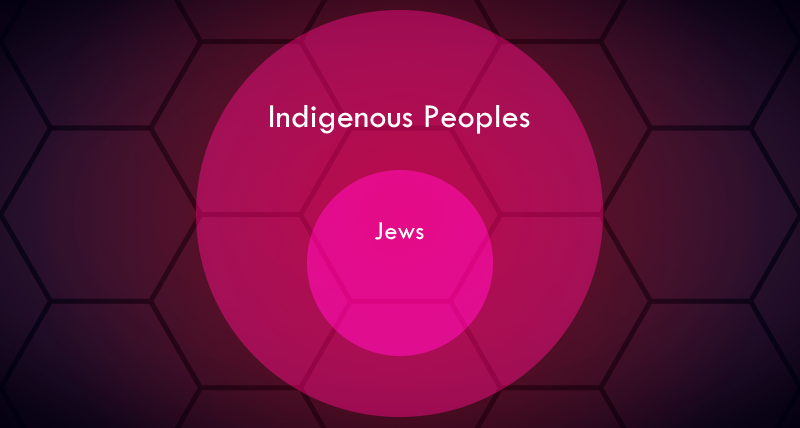
Jews Are Indigenous to Israel
We can use deductive reasoning in order to prove that Jews are indigenous to Israel. To do this, we must first clarify the definition of indigenity, as well as establish verified historical facts about the Jewish presence in their homeland.
Secondly, the Kingdoms of Israel and Judah are ancient. They have existed for about 3000 years, and their Jewish population has been ever-present in the region up until this day. Jews have preserved their religion, their language, and all of their traditions.
Historically, there is a simple explanation for the preservation of Jewish culture, and I will explore it in detail in a future lecture. But in short, the principle is that peoples with unique languages and scripts, religions, and customs, are far more likely to resist assimilation than those without. There are many examples of this apart from Jews, such as Bulgarians.
In any case, with the facts established, let us begin writing our argumentation:
- Premise: Indigenous Peoples are the original inhabitants of a region with cultural, social, and historical ties to their ancestral lands.
- Premise: The Kingdoms of Israel and Judah housed Jews for thousands of years before being conquered, and Jewish presence in the region remained constant to this day.
- Conclusion: Jews are an Indigenous People, and the original inhabitants of Israel and Judah.
This argument is sound. Its premises lead to a truthful conclusion, which can be verified. As I explained in the lecture, the category of indigenous people is the general, and Jews are the particular case. This is what makes our argument deductive.
Defining Apartheid
Accusations against Israel allegedly being "an apartheid state" have been flying out of the mouths of countless people for decades. The problem is that reality does not support their allegations.
Let's begin with the definition of apartheid. According to Merriam-Webster, apartheid refers to racial segregation. Specifically, the term originates from South Africa as a policy from last century, where significant socio-political segregation against the non-white population of SA was exercised. Fortunately, this does not seem to be the case today.
This racial segregation is defined by what jobs people of particular ethnic backgrounds can hold, what political and institutional positions they can occupy, and where they can live or own land.
Now, let us explore all of these categories (jobs, institutions, land) and verify the situation in Israel.
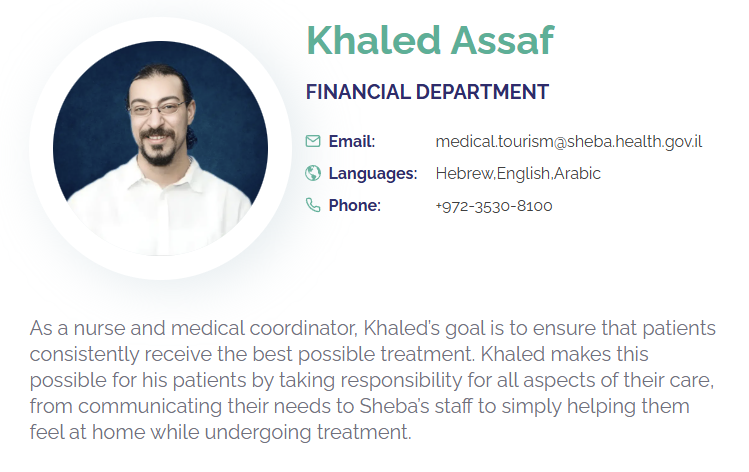
After a quick Google search, I discovered that the Sheba Medical Center's prominent nurse and medical coordinator in the Financial Department is named Khaled Assaf, who speaks Arabic, Hebrew, and English.
Immediately after this, I noticed that one of the Case Managers in the Patient Relations Center is named Jozef Barokas, who offers medical care in Turkish, Hebrew, and English.
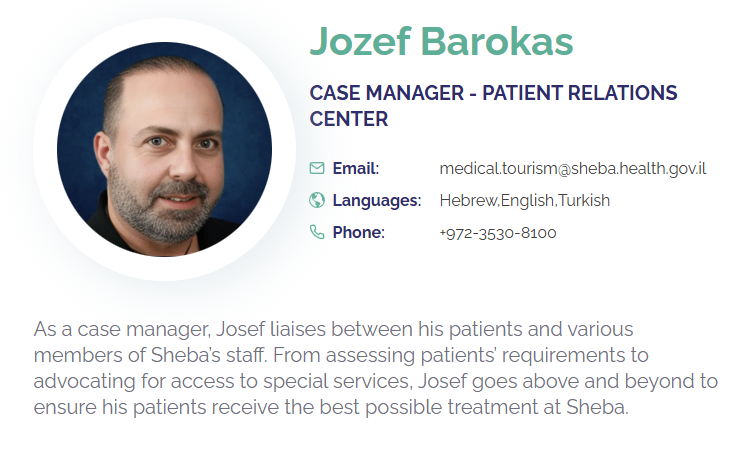
Since these healthcare providers are explicitly stated to practice their treatment in Arabic and Turkish, as well as Hebrew, this immediately points to the fact that all patients speaking those languages can visit the Sheba Medical Center all the same. In an apartheid regime, individuals of varying ethnic backgrounds who spoke different languages would not be treated in the same medical center, nor would that center's healthcare providers accommodate the languages patients speak.
This showcases that Arabic and Turkish speakers are able to occupy incredibly important medical positions. Khaled Assaf is an especially important example, as his name is completely Arabic.
Within the Knesset, which is essentially Israel's government, numerous political parties exist, most notably the Ra'am Party - an Arab party with roots in the Islamic movement. Their leader is Mansour Abbas, which is a traditional Arabic name as well.
In case of doubts, Mansour Abbas' Wikipedia page states that he was born and raised in Israel, and has attended the Hebrew University of Jerusalem.
We have established that there exist Arab political parties in Israel's Knesset, and that they have Muslim Arab politicians born and raised in Israel with equal rights. And given that Israel is the Jewish State, the existence of Arab political parties within its government render it pluralistic and democratic.
Before moving onto the argumentation, it should be established that arguments can have numerous premises, not just two. Such arguments are known as polysyllogisms. Up until now, the arguments explored were syllogisms. In logic, there's no limit to the number of premises a syllogism can have - whether they are two, three, or forty.
With that in mind, here is the first polysyllogism:
- Premise: Apartheid is racial segregation that limits human rights and opportunities.
- Premise: Israeli hospitals house diverse healthcare professionals.
- Premise: Israel's government houses Arab and Muslim political parties.
- Conclusion: Israel is NOT an apartheid state.
And the second:
- Premise: Pluralism is ethnic diversity and equality.
- Premise: Democracy is a governmental organization of equal participation rights, regardless of background.
- Premise: Israeli hospitals house diverse healthcare professionals.
- Premise: Israel's government houses Arab and Muslim political parties.
- Conclusion: Israel is an inclusive, pluralistic democracy.
Both arguments are sound because all of their premises are supported by verified data, and the conclusions logically follow from those premises.
People insist on the inverse:
- Premise: Apartheid is racial segregation that limits human rights and opportunities.
- Premise: Israeli hospitals house diverse healthcare professionals.
- Premise: Israel's government houses Arab and Muslim political parties.
- Conclusion: Israel is an apartheid state.
This argument is invalid and unsound. The conclusion does not follow from the premises whatsoever.
I can only guess that some readers are going to think, "Well, the people who come to this conclusion have the wrong premises, so their argument is technically valid!"
The argument may be valid because its conclusion follows from their premises, but it is still incorrect and unsound because it does not match reality. A "valid argument" like this is functionally useless, misleading, and baseless.
Everyone has a responsibility to educate themselves and verify if their premises are factually correct. All I did was a few quick Google searches just to provide evidence for this lesson. I did not invoke my long-standing knowledge on Israel, nor did I cite my Pastebin document (until now anyway).
I checked a single hospital, and Israel's core legislative body - the Knesset. They are far from the only examples, and given you are equipped with an Internet connection, you have the first-world privilege of being able to research this further if you so desire.
The Benefits of Critical Thinking
A single lesson in formal logic is all it takes to be able to dismantle two of the most dangerous lies and blood libels about Israel. Adding new knowledge to your arsenal means acquiring new tools to dismantle those lies and expose the faulty reasoning of antisemites.
You are free to cite my work whenever you find yourself in a debate. That's the other reason why I am writing these detailed articles.
In the next lecture, we will take a look at conditional reasoning.
Sufian M'Barki
lecture seminar logic journalism israel antisemitism
Loading witnesses...
Comment Threads (0)
Stateless Federated Authentication. Markdown supported. Zero tracking cookies.